Walking a dog with one person is straightforward compared with coordinating a stroll with multiple people. Suddenly you have different walking speeds, variable hold on the leash, multiple commands, and a tangle risk that can turn a pleasant outing into a frustrating tug-of-war. For families, dog-walking groups, and training classes in Virginia Beach that split handlers during practice, mastering leash skills for multi-person walks keeps the dog safe, reduces stress, and makes walks genuinely enjoyable.
I coach owners and groups at Coastal K9 Academy and elsewhere around Virginia Beach. Over years of working with reactive terriers, exuberant retrievers, and nervous rescues, I developed techniques that hold up when three people want to walk a single dog without chaos. Below I share practical, tested methods, common pitfalls and trade-offs, and specific drills you can use on the beach, on neighborhood sidewalks, or in the dunes near First Landing.
Why multi-person leash skills matter right now
When several people handle one dog, small inconsistencies become big problems. A child unfamiliar with leash tension will freeze as the dog moves forward. One handler praising the dog at the wrong moment can accidentally reward pulling. Different commands, even slight timing differences, create confusion that magnifies in crowded places. In Virginia Beach these dynamics are amplified because of changing surfaces, shoreline distractions, other dogs, and bicycles. Teaching the dog consistent responses to position, attention, and leash pressure prevents safety incidents and preserves the relationship between dog and people.
The core idea is not to eliminate movement or excitement, but to create predictable cues the dog can rely on. That predictability lets handlers who vary in strength or experience feel confident and keeps the dog calm and responsive.
Equipment and setup that make multi-person walks safer
Use practical gear that reduces strain without masking the problem. A front-clip harness or a well-fitted head halter gives better directional control than a collar for dogs that pull. For shy or reactive dogs, a martingale collar paired with a front-clip harness is often the safest option; it provides a backup without causing excessive neck pressure in normal conditions. Avoid retractable leashes here; they create varying tension and are difficult to coordinate between handlers.
Choose leash length deliberately. For three people, a 4- to 6-foot leash is ideal. Longer leads create more slack and entanglement risk, shorter leashes limit the dog’s natural movement and can increase reactivity. Use clip-style couplers only if you understand how to manage the dog’s center of mass; they can be useful for tandem walks with calm dogs but are dangerous with high-energy or reactive animals.
Gear checklist (short)
- front-clip harness or head halter suitable to the dog two or three 4 to 6 foot fixed-length leashes, same material secure, waist-level handle or wrist loop for the lead handler high-value treats in pockets for reinforcement
Why consistency beats strength
In class I often see families relying on stronger people to control a dog. Strength only works until you lose it, and it teaches the dog to fight force. Instead, focus on consistent cues and predictable consequences. If the dog pulls, all handlers must react the same way. If the dog is asked to sit, everyone must give the sit cue and wait quietly for the sit to be fulfilled before moving. Inconsistent praise or variable timing undermines learning.
For example, I worked with a Labrador that lunged for birds when one of three handlers jogged ahead. The jogger unknowingly rewarded the behavior by allowing the dog to surge forward. The remedy was simple and effective. We agreed on one handler who set the pace, taught the dog a clear recall and a crosswalk sit, and insisted that any movement by other handlers be initiated only on the lead handler’s cue. After four practice sessions the dog anticipated the cue rather than chasing birds.
Positioning and simple formations that reduce tangles
Think of multi-person walking as choreography. Decide positions relative to the dog before you begin. The simplest formation is a line with the dog between two people: lead handler, dog at heel, and secondary handler slightly behind and to the side. This formation reduces tugging from multiple angles and keeps all handlers ready to support or redirect. For three people walking one dog, assign the middle spot to the most experienced handler; that person establishes pace and issues commands. The others mirror that pace and avoid spontaneous moves.
When approaching distractions, tighten formation. Bring the dog into a side position rather than letting it walk ahead. Use a short, steady leash hold and quiet voice to guide attention. If someone needs to cross a street, they should announce their intention and coordinate with the lead handler so the dog stays centered and calm.
Training exercises to practice with two or three handlers
Practice in small, controlled doses and increase complexity gradually. Start on quiet sidewalks or in a fenced yard. Keep sessions short, four to ten minutes, with real reinforcement and clear goals.
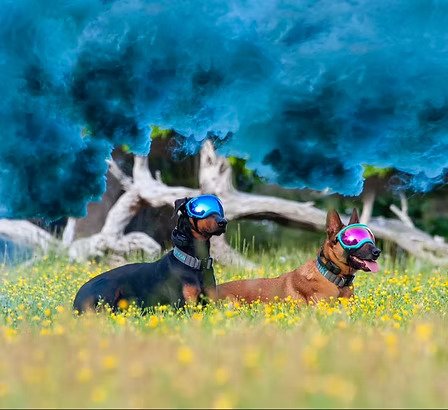
Begin with a foundation drill I call synchronized stand-and-step. One handler teaches the dog a reliable sit or stand. The other handler practices stepping forward and stopping in sync with the lead. The goal is for the dog to accept movement from another person without pulling toward them or breaking the sit. Repeat this until the dog stays put while handlers move around in predictable ways. This drill builds trust and helps handlers coordinate timing.
Another effective drill is the side-change. With two handlers, walk the dog at the lead handler’s side for a few steps. The second handler mirrors the same steps on the other side. On cue, both handlers switch sides simultaneously while keeping leash tension neutral. The dog learns to maintain position irrespective of which person is on which side. This is particularly useful for dogs that try to follow the more dominant handler or constantly shift toward one person.
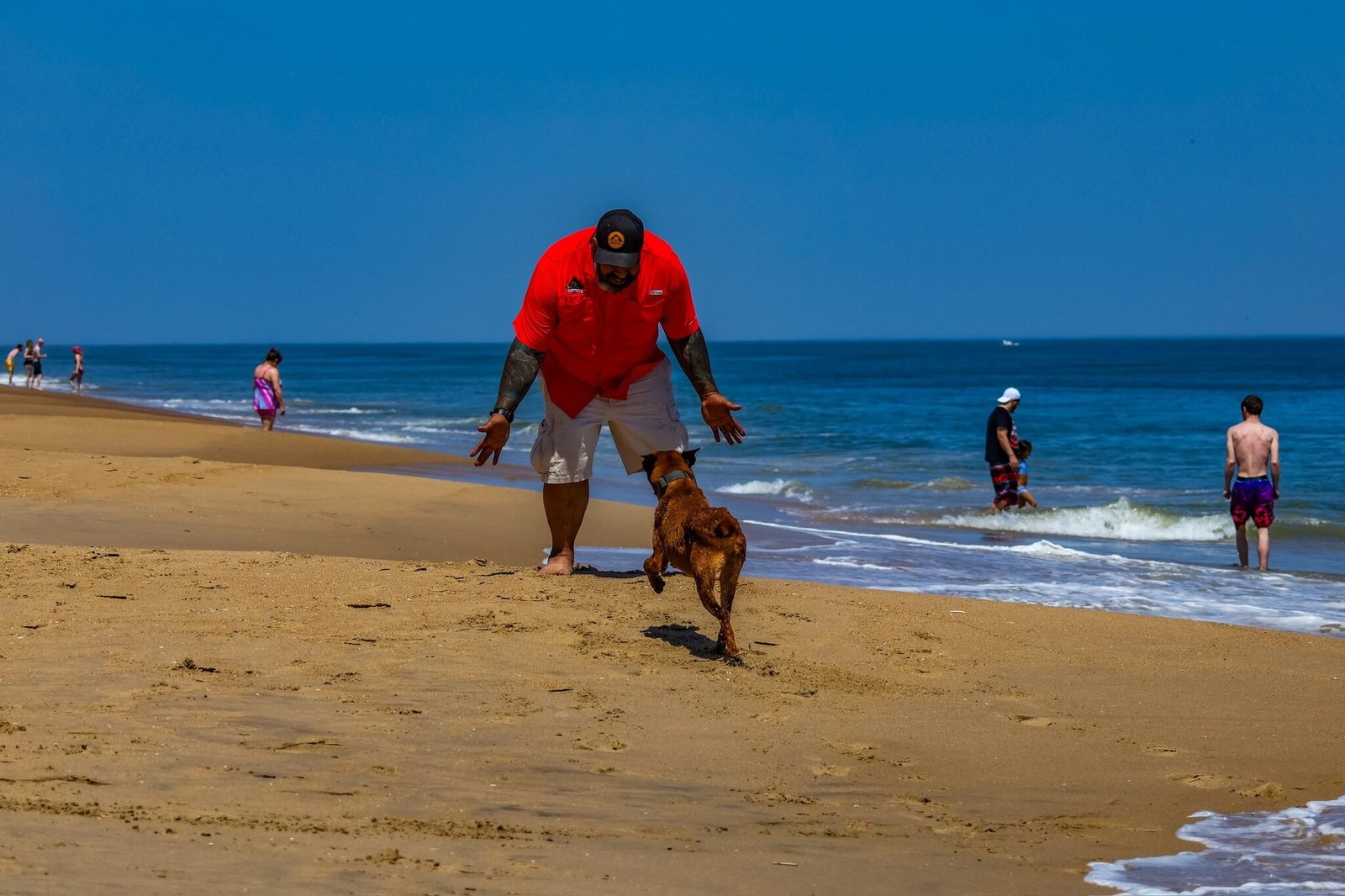
For real-world preparation, stage a controlled approach to a distraction. Have one handler set a visible target, such as a person with a hat or umbrella, while the lead handler keeps the dog focused with a command like look or name. The secondary handler practices stepping forward only when the dog is attentive and the lead handler gives Dog Training in Virginia Beach VA a release cue. This trains handlers to rely on the dog’s attention rather than reacting to the environment.
Commands and language to keep consistent
Use short, distinct cues for position and attention. Keep verbal cues simple and consistent across all handlers. If "heel" is used by one person and "close" by another, the dog will not know which behavior you want. Choose cues for these essentials: attention, sit, stay, move, and release. Practice them until handlers use the same volume and tone.
Command checklist (short)
- attention cue (name or look) sit/stay move or forward release or free
Timing and reinforcement strategy
Timing is everything. Reward the dog for the exact behavior you want, and reward immediately. In multi-person contexts the person who has a treat must be ready to give it at the instant the dog responds. Carry multiple small, high-value treats so reinforcement can be immediate regardless of who is holding the leash. When possible, rotate the rewarding person so the dog learns to respond to anyone, not just the treat-giver.
Use variable reinforcement as the dog improves. Start with continuous rewards for correct position and attention. As the dog becomes reliable, switch to intermittent reinforcement and use longer praise or a scratch behind the ears as occasional rewards. This prevents dependence on food and builds a stable behavior under different handlers.
Handling edge cases and behavioral pitfalls
Some dogs show resource guarding or handler preference problems that only surface during multi-person walks. A dog that becomes possessive of the primary handler’s attention may snap or stiffen when another person touches them. In these cases, handle interactions carefully. Teach the dog that multiple hands approaching is a positive experience by pairing those approaches with high-value rewards. Never force interaction; let the dog choose a calm response. If aggression is a risk, consult a behaviorist before attempting multi-person walks.
Another edge case is a strong prey drive. Dogs that chase birds, squirrels, or bicyclists will often ignore multiple handlers, so prioritize recall and emergency stops before attempting multi-person maneuvers. A reliable emergency recall can be the difference between a near miss and a hazardous situation. Practice recall in gradually more stimulating environments until it is solid, then add multi-handler complexity.
Coordination rules for groups and families
Set simple ground rules before stepping out. Agree on who leads, who rewards, and who watches for hazards. Handlers should avoid sudden shifts in speed. Children should hold the leash only under adult supervision and practice with a harness during training sessions rather than on public walks. If someone needs to leave the group or cross the street, they announce it and wait for the lead handler to signal permission. Clear rules reduce surprises that prompt the dog to test boundaries.
When teaching a new handler, start with a one-on-one walk first. Make sure the dog understands basic commands with that person alone before integrating them into a group. That builds confidence and prevents mixed messages.
Real-world example from Virginia Beach
One of the families I worked with in Virginia Beach had a lively beagle that loved the waterfront. The family wanted to walk together with grandparents, a teenager, and a toddler in a stroller. The dog would lunge toward the dunes when gulls gathered and pull between handlers, putting the toddler at risk. We broke the training into parts. First, we taught the dog a strong sit-stay at a traffic pole with the family progressively moving away. Then we practiced synchronized walking on the boardwalk with short leashes, letting the teenager carry treats and the grandparents focus on holding a calm line. After two weeks of 10-minute daily practice, walks became manageable. The dog learned to orient to the lead handler and to ignore gulls unless given a release. The family regained confidence, and the toddler could safely sit in the stroller without the leash crossing the path.
When to seek professional help
Not every problem is solvable with practice alone. If the dog shows escalating aggression, sustained fear, or persistent refusal to obey basic commands in multi-handler situations, consult a professional. Trusted dog trainer near me searches often lead to labs offering group classes and behavior consults. Look for trainers who use positive reinforcement, have experience with multi-handler scenarios, and can run on-leash trials in real environments. Coastal K9 Academy and other reputable trainers in Virginia Beach VA offer structured classes that simulate the exact challenges described here. A professional can provide tailored corrections and a safe progression plan that you can follow at home.
Measuring progress and maintaining gains
Track progress with small, objective metrics. How long can the dog stay at a heel position while two people change sides? How many feet can the dog maintain a loose leash near a distraction? Record times and distances and aim for incremental increases. Celebrate small wins. A dog that goes from pulling constantly to walking loosely for five minutes around the block has made meaningful progress.
Maintenance matters. Once the dog demonstrates consistent behavior in familiar places, practice in new environments. Every beach, park, or shopping street teaches slightly different lessons. Rotate which person carries treats and vary the times of day and routes. That variability prevents the dog from overfitting to a single context.
Trade-offs and judgment calls
There are trade-offs in every decision. Head halters provide control but can be aversive if used incorrectly. Front-clip harnesses reduce pulling without pressure on the neck but allow more lateral movement. Using food rewards builds cooperation quickly, but over-reliance can tether progress to treats. My judgment is to favor non-coercive tools and consistent cues, then fade food gradually. If safety is a concern, prioritize tools that give reliable control while you teach the dog alternatives.
Final encouragement and next steps
Walking together should feel like teamwork, not a tug-of-war. With consistent commands, coordinated roles, and measured practice, most dogs adapt to multi-person walks in weeks rather than months. Start with short, structured sessions; choose the simplest gear that works; and prioritize safety when distractions arise. If you live in Virginia Beach and search for dog training near me or trusted dog trainer near me, visit local classes and bring the whole team. Working with a coach—even for a few sessions—provides objective feedback that accelerates learning and keeps everyone safe.
If you want, I can sketch a two-week practice plan tailored to your household: who to place as lead handler, which drills Dog Training Virginia Beach Coastal K9 Academy to run each day, and a checklist to track progress on leash manners and attention. Coastal K9 Academy and similar local options can supplement home practice with group sessions that recreate the exact situations described here.
Coastal K9 Academy
2608 Horse Pasture Rd, Virginia Beach, VA 23453
+1 (757) 831-3625
[email protected]
Website: https://www.coastalk9nc.com